 By Thefamefile@gmail.com
Introduction
Lionel Messi is one of the most recognizable soccer players in the world. Born in Rosario, Argentina, on June 24, 1987, Messi developed a passion for football when he was still a young child and eventually moved from Argentina to Spain to pursue his dream. His journey took him from the youth system of Newell’s Old Boys to FC Barcelona, Paris Saint-Germain, Inter Miami and the Argentina national team. Along the way, he collected major club trophies, individual awards and international titles.
Messi’s career has also included difficult moments. His small stature and childhood growth-hormone condition created challenges during his early years, while his move away from Argentina meant leaving family and friends at a young age. Nevertheless, his development at Barcelona transformed him into a global football star. In 2026, Messi remains an Inter Miami player and continues his professional career after announcing his retirement from international football.
Lionel Messi’s Early Life in Argentina
Lionel Andrés Messi was born in Rosario, Santa Fe, Argentina. Football became an important part of his childhood almost immediately. He played with older children and joined the youth system of Newell’s Old Boys when he was eight years old. Even as a child, his technical ability and close control of the ball attracted attention.
Messi’s physical development became an important part of his early story. Doctors diagnosed him with a growth hormone deficiency, requiring regular medical treatment that was expensive for his family. When Barcelona offered him the opportunity to join its famous youth academy while helping cover his medical treatment, Messi and his family made the major decision to move to Spain.
The move was difficult because Messi was only 13 years old. He had to leave his hometown, relatives and familiar surroundings behind. However, he quickly progressed through Barcelona’s youth system. His small stature eventually became less of a limitation because his low center of gravity, acceleration, balance and extraordinary ball control became important elements of his playing style.
The Beginning of His Barcelona Career
Messi joined FC Barcelona’s youth system, La Masia, at the age of 13. His progress through the club’s youth teams was rapid, and he eventually received an opportunity with the senior side. He made his first-team appearance at just 16 years old.
On May 1, 2005, Messi scored his first official Barcelona goal against Albacete. That goal was an early indication of what was to come. Over the following seasons, he developed from a promising young player into one of the central figures of Barcelona’s team.
His partnership with other talented players helped Barcelona achieve major success in domestic and European competitions. Messi became increasingly influential as both a goalscorer and creator. His ability to dribble past defenders, deliver precise passes and finish chances made him a constant threat.
Barcelona’s greatest periods with Messi included multiple La Liga championships, Copa del Rey victories and UEFA Champions League triumphs. In 2009, Barcelona achieved a historic season in which the club won the Champions League, La Liga and Spanish Super Cup, while Messi also received major individual recognition.
Messi’s Records and Ballon d’Or Success
Messi’s Barcelona career eventually produced an extraordinary collection of individual records. One of his most famous achievements came in 2012, when he scored 91 goals in a calendar year for club and country. That figure surpassed Gerd Müller’s previous record of 85 goals from 1972.
During his Barcelona years, Messi also became the club’s all-time leading scorer. He won the Ballon d’Or multiple times and continued to establish himself among the leading players of his generation.
His individual success continued throughout the 2010s. Messi won a record eight Ballon d’Or awards, along with multiple European Golden Shoes and other scoring honors. His achievements were not limited to goals because he also developed into an exceptional playmaker who regularly created opportunities for teammates.
His Barcelona career ended in 2021 after 17 seasons with the first team. Barcelona announced that financial and La Liga registration restrictions meant a new contract could not be registered. Messi left the club in an emotional farewell after spending the majority of his professional career there.
His Years at Paris Saint-Germain
After leaving Barcelona, Messi joined Paris Saint-Germain in 2021. The move brought him together with several high-profile players, including former Barcelona teammate Neymar and French forward Kylian Mbappé.
Messi spent two seasons with PSG. During his time in France, he helped the club win Ligue 1 titles and contributed goals and assists in domestic and European competition. His PSG period was shorter than his Barcelona career, but it represented an important new chapter because it was the first time he played for a European club other than Barcelona at senior level.
Messi left PSG in 2023 after his contract ended. He then faced an important career decision about where to play next. Rather than continuing in European football, he chose a new challenge in Major League Soccer with Inter Miami.
Lionel Messi and Inter Miami
Messi joined Inter Miami in July 2023, beginning a new phase of his career in the United States. The move created enormous interest in MLS and immediately changed the international attention surrounding the Miami club.
His impact was visible almost immediately. Messi helped Inter Miami win the 2023 Leagues Cup, giving the club its first major trophy. He continued to play an important role in the team’s development and became its captain.
Inter Miami later achieved further success. The club’s official records credit Messi with helping the team win the 2024 MLS Supporters’ Shield, the 2025 Eastern Conference title and the 2025 MLS Cup. He also won the MLS Golden Boot in 2025 after scoring 29 goals and recording 48 total goal contributions.
Messi reached another milestone in 2026 when he made his 100th appearance for Inter Miami. The club also confirmed that he had signed a contract extension keeping him in Miami through the 2028 MLS season.
Messi and the Argentina National Team
Messi’s relationship with the Argentina national team has been one of the most important parts of his career. He first made a major impression with Argentina’s youth team, helping the country win the 2005 FIFA World Youth Championship.
His senior international career included several difficult tournament experiences before major success arrived. Argentina reached the 2014 World Cup final, where Germany won in extra time. Messi was named the tournament’s best player, but the defeat left him without a senior international title.
The situation changed in 2021 when Argentina won the Copa América. Messi was one of the leading figures of the tournament, and the victory became his first major senior international trophy with Argentina.
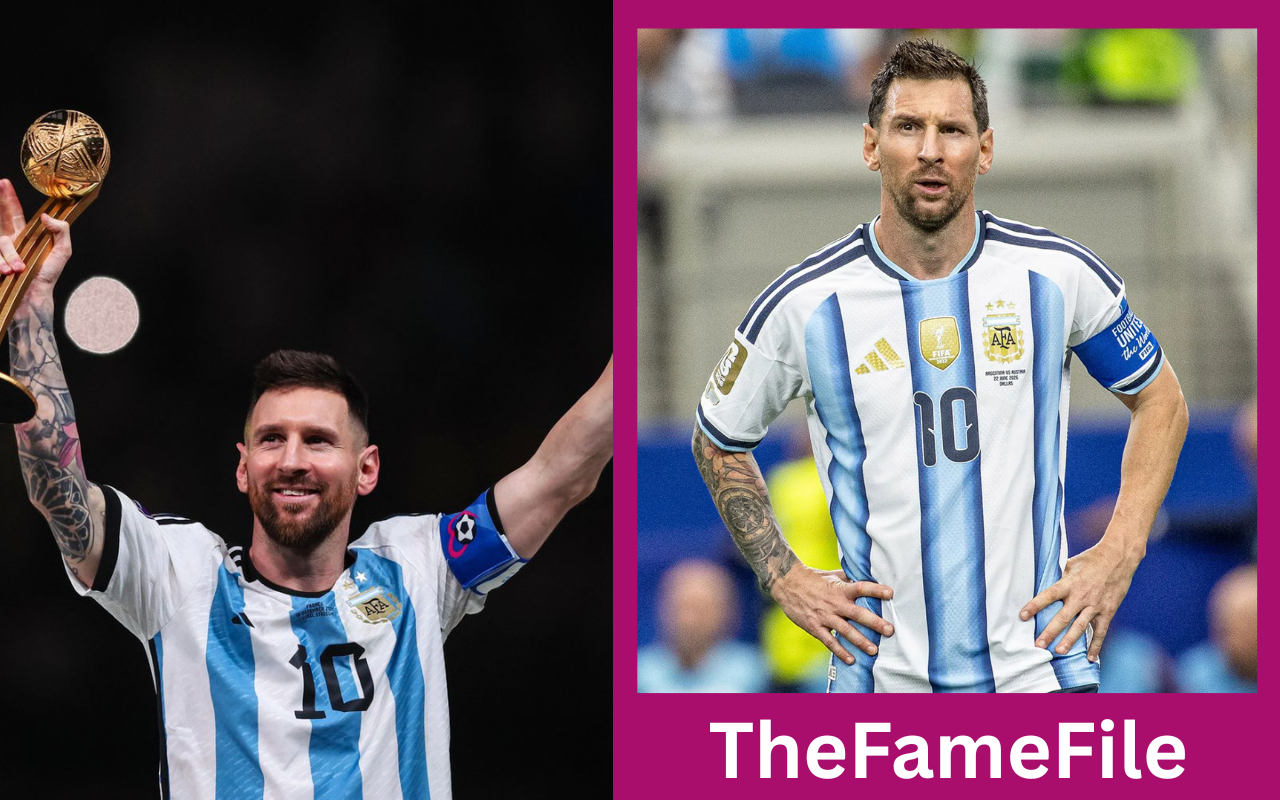
The following year brought the defining international achievement of his career. Argentina won the 2022 FIFA World Cup in Qatar after defeating France in a dramatic final that ended in a penalty shootout. Messi scored twice during the match and was awarded the Golden Ball as the tournament’s best player.
Argentina subsequently won the 2024 Copa América, adding another major international title to Messi’s career.
The 2026 World Cup and International Retirement
Messi also represented Argentina at the 2026 FIFA World Cup, becoming one of only two men to have appeared at six different World Cups. His participation added another remarkable chapter to an international career that had already included the 2022 World Cup victory.
During the 2026 tournament, Messi added more goals to his World Cup record and became one of the competition’s leading all-time scorers. He eventually announced his retirement from Argentina’s national team in August 2026 after more than two decades representing his country.
However, international retirement does not mean that Messi has retired from professional soccer. He continues to play for Inter Miami, where his current contract extends through the 2028 MLS season. In September 2026, Reuters also reported that Argentina had called Messi up for a farewell international appearance against Benin on October 6, showing that his international career was receiving a formal closing chapter despite his retirement announcement.
Messi’s Family and Life Away From Soccer
Away from football, Messi has maintained a relatively private family life. He married Antonela Roccuzzo in 2017. The couple knew each other from their hometown of Rosario and eventually built their family together.
Messi and Roccuzzo have three sons named Thiago, Mateo and Ciro. Family has remained an important part of Messi’s life, particularly after spending much of his childhood and adult career away from Argentina.
Messi has also been involved in charitable work. In 2007, he established the Leo Messi Foundation, which supports children and young people facing difficult circumstances. He was also appointed a UNICEF Goodwill Ambassador in 2010, becoming involved in initiatives focused on children’s rights.
His life away from football has also been documented through television and streaming projects, including the series Messi’s World Cup: The Rise of a Legend, which followed his journey with Argentina during the 2022 World Cup.
Messi’s Legacy and Career in 2026
Lionel Messi’s career now covers more than two decades at the highest levels of professional soccer. He has played in Argentina, Spain, France and the United States, winning domestic championships, international competitions and individual awards along the way.
His playing style has remained closely associated with his left foot, close control, vision, dribbling and ability to create scoring opportunities. Rather than being limited to one position or role, Messi has adapted throughout his career. At different stages, he has played as a winger, attacking midfielder, false nine and central attacking player.
In March 2026, Messi also reached the milestone of 900 professional career goals, becoming only the second male player to reach that figure according to contemporary reports.
His continued presence at Inter Miami means his professional story is still developing. Even after ending his Argentina career, he remains active at club level. Inter Miami’s official profile lists him as a forward wearing number 10 and identifies him as an Argentine international and left-footed player.
Conclusion
Lionel Messi’s story began in Rosario with a young boy who loved football and faced a medical challenge affecting his growth. His move to Barcelona at 13 changed his life and eventually led to one of the most decorated careers in modern soccer. At Barcelona, he became a record-setting scorer and won numerous trophies before moving to Paris Saint-Germain and later Inter Miami.
His Argentina career followed a more complicated path, with major tournament defeats preceding his international breakthrough. The 2021 Copa América, 2022 World Cup and 2024 Copa América became defining achievements for Messi and Argentina. His participation in the 2026 World Cup added another chapter before he announced his retirement from international football.
Messi’s professional career continues with Inter Miami, where he has already helped the club collect important trophies and has reached the milestone of 100 appearances. With his contract extending through 2028, his soccer story is not yet finished. His career remains closely connected to his family, Argentina, Barcelona, Inter Miami and the records he has accumulated across more than two decades in professional football.